
05.9 / WEDGE WIRE PANELS & CYLINDERS
Wedge Wire Panels & Cylinders
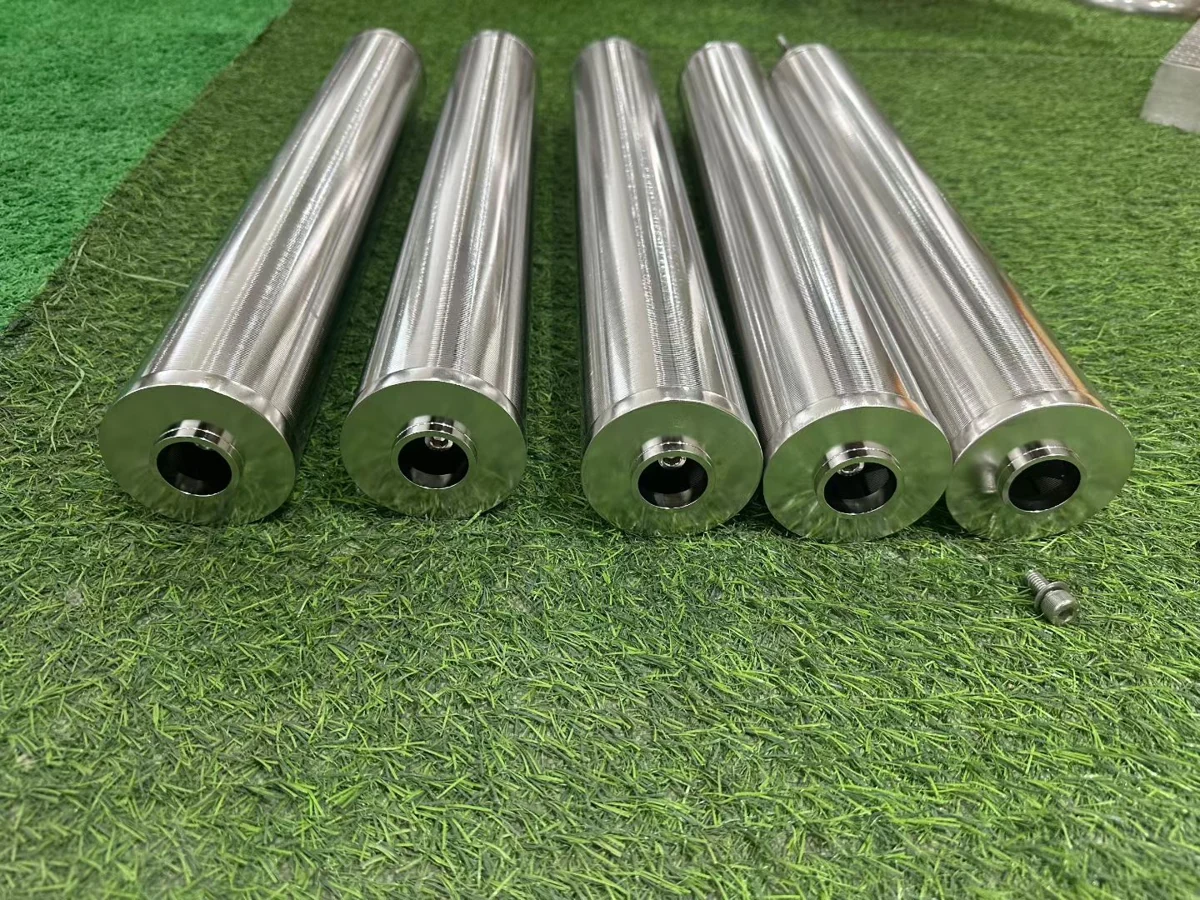
Profile wires and support members form continuous slots for screening and solid-liquid separation. Confirm particle targets, flow direction, open area and structural strength.
Start with a photo or drawing, even if some specifications are still unknown.
Download catalog (Chinese PDF) View the product family · Precision Screens & Custom ComponentsProduct & selection information
- Common materials
- SS304, SS316 / SS316L; confirm the alloy against the process medium.
- Construction options
- Flat panels or cylinders; confirm slot direction, support spacing and mounting frame against the drawing.
- Dimensions
- Screen dimensions: slot s, panel length L / width W, or cylinder diameter A / length L.
- Filtration requirements
- Mesh count, wire diameter or target filtration rating; confirm the rating definition and verification method.
Dimensions to discuss
Not to scale. Letters identify dimensions to be confirmed.
Screen dimensions: slot s, panel length L / width W, or cylinder diameter A / length L.
Common structures & selection priorities
- Construction options
- Flat panels or cylinders; confirm slot direction, support spacing and mounting frame against the drawing.
- Dimensions
- Screen dimensions: slot s, panel length L / width W, or cylinder diameter A / length L.
- Key considerations
- Slot width is critical, but separation also depends on particle shape, flow, material properties and cleaning. Confirm operating conditions and verification requirements.
Filtration knowledge & FAQs
Does slot width alone determine separation?
Slot width is critical, but separation also depends on particle shape, flow, material properties and cleaning. Confirm operating conditions and verification requirements.
Is mesh count the same as filtration rating?
Mesh count describes openings per inch. Aperture also depends on wire diameter and weave; mesh count alone does not establish particle retention.
How do operating pressure and differential pressure differ?
Operating pressure is the system pressure. Differential pressure is the pressure difference across the element. Confirm operating pressure, clean pressure drop and maximum allowable differential pressure.
How are cleaning and maintenance determined?
Confirm cleaning methods, backwash conditions and replacement criteria against the equipment instructions and process medium, rather than appearance alone.